Showing posts with label history. Show all posts

Tuesday, September 12, 2017

Uncommon Eloquence, Common Cause: Frederick Douglass & Abraham Lincoln

During an age when letter writing was the typical mode of communication for even the shortest distances, the eloquence in those missives, (from the meanest, most pedestrian communiqués to the most important and formal declarations) was a common feature and a common courtesy. This was especially true during times of conflict and national upheaval, such as the Revolutionary War, the War of 1812, and War Between the States. Letters that readily illustrate this fact are still in existence from each of those periods.
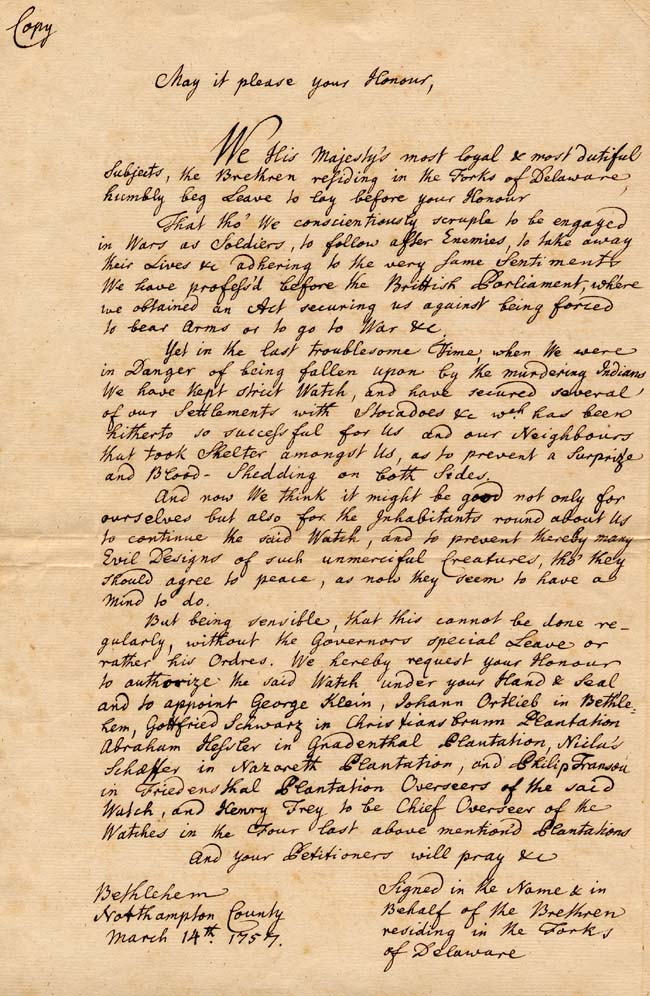
 Yet some orators (or writers) managed to stand out and above this practice of ‘common eloquence’, elevating writing to the level of prose so powerful that some of it now ranks as part of the national heritage of American literature. Two such writers of this caliber were the firebrands of their age: Frederick Douglass and Abraham Lincoln.


Douglass and Lincoln had a common goal, but did not always agree on how to achieve it. They also had an unusual and rather uncommon background, one that they shared and which made them brothers of sorts: Frederick Douglass’s father may have been white, and was probably his owner, albeit one who apparently loved and doted on him. (He also most likely arranged for both his escape from slavery, and his education.)


Lincoln had worked as an indentured servant from childhood to young adulthood, a type of bonded servitude, the polite term for slavery, which was used when referring to whites and foreigners of European descent. He was ‘rented out’ by his own father, Thomas Lincoln, for menial, backbreaking labor (such as rail splitting and hog butchering) in rural Indiana, until he was twenty-one. His earnings amounted to thirty-one cents a day, presumably none of which he was allowed to keep.

As an adult, he grew to detest the work and the practice whereby one human being used another to perform endless, backbreaking, menial labor. The memory of that period of his life would eventually inform and influence his opinion of slavery, once he realized abolishing it for all time was, in fact, the only way to bring the country back together. However, at onset of the war, this was, admittedly, not his primary goal; it had originally been the salvation of the Union no matter the cost, with slavery, or without it. There was a time when that choice did not matter to him, where the fate of the Union was concerned.


 Douglass, on the other hand, saw no other option and no course of action other than the instant, ultimate, and complete abolishment of ‘that most peculiar institution’ slavery, including equal treatment and pay for freed blacks enlisted in the Union army.

Herein lay the vast, roiling sea of the differences between them, and what was to become the seed of their eventual respect for each other, and their friendship.

Lincoln had the more difficult challenge before him, convincing a culture that had owned slaves for generations to give up the plantation lifestyle and the considerable wealth that came with it, and the divestiture of their ‘property’ with freedom and full citizenship for persons who had once been held as valuable chattel.

If he proceeded too quickly, the enterprise would be doomed from the start. Even though Douglass knew Lincoln’s reason for erring on the side of caution, he had neither his adversary’s time nor patience to proceed at the beleaguered president’s maddeningly measured pace. Still, Douglass had to admit this himself, after the fact, that Lincoln had been right.

The two, Mr. Frederick Douglass and President Abraham Lincoln, possibly greatest leaders of their time, met on three occasions (in 1863, 1864 and 1865, the same year Lincoln was eventually assassinated), to discuss these most poignant concerns. Each went on to write about those meetings and their common goals. Ultimately, the most powerful voices of the Civil War became, if not the greatest of friends, then great respecters of each other’s ideals, burdens and integrity.


Together, their words forced a nation to free itself from the hideous institution of slavery that had existed from long before the War of Independence until the end of the Civil War.

What the Founding Fathers could not (or would not) address in the Declaration of Independence or the Constitution was left to be hashed out by Lincoln, Douglass, and their contemporaries. The words they left behind on paper bear witness, both silent and thunderous, to a time and place in American history when finally, the lofty ideals espoused so eloquently by the Founders began to be fully (if somewhat reluctantly ) embraced and expanded to include more than just the privileged few. 


Sunday, April 16, 2017

What Is Culture?

What Is Culture?


(Note: The following piece was written responding to story that was published on https://www.NPR.com about dropping population numbers in Japan, with fewer and fewer younger couples choosing to having children at home, while others traveled abroad, such as to the US, to have careers and start families. The question raised in the comments that followed was ‘What happens to a culture when its people are gone?’)

Japan is a top-tier ‘first world’ society. It now enjoys a strong presence in the capitalistic sphere equal to the United States in many respects. As such, Japan has a considerable influence on the world’s economy at large through dozens of its technology sectors and companies.

However, the current population fluctuations and downturns make it potentially quite fragile. Therefore, what would happen if the worst were to occur, and its numbers dwindled to a point of virtual ‘no return’ (or, at the least ‘non-viability’), one which would make it impossible for any such country to continue to function as nation, and a people? (Sorry, Japan! This short essay is merely speculation and conjecture on my part, and an intellectual exercise, using current population trends as a platform for conjecture.)

Well, as much as we like to think sashimi, Manga, (or tacos) define a culture, they do not. Those types of ‘relics’ are just the physical manifestations of culture, symbolic representations of it. Without a living, thriving society behind them, they are nothing. (Consider Taco Bell is not in the business of selling ‘culture’ after all, only Americanized ‘cuisine copies’ of the artifacts of a culture, and not very accurate ones at that.)

It is easy to confuse the artifacts or physical manifestations of a culture with the culture itself. Manga and sashimi are just physical manifestations or outward expressions of the unique culture of a people, with Manga being an intellectual expression (articulated as an art form), and sashimi being a dietary one, expressing the importance of a food staple endemic and indigenous to a particular region. (The last classification is the most important.)

Therefore, these outwardly manifested expressions are nothing by themselves, which explains why it is so easy to export them to fast-food restaurants and other mass markets, which offer the cuisine (or the art reproductions, or other by-products of a culture), but cannot offer the intangible essence or the finite qualitative experience of that culture.


‘Culture’ is the impetus behind these artifacts, but it is not a physical thing itself, and they are not the sole expression of what constitutes that culture. Those artifacts merely present an outward facet of that culture, in essence, a physical representation of a nonphysical, even spiritual phenomenon.

Culture, instead, may be described thus: “Culture is the living expression of a people’s ongoing history of survival and adaptation through all the rigors of their native environment, including its resources, or the lack thereof. The outwardly manifested ‘cultural artifacts’ (national art, style and mode of clothing, literature, cuisine, religious practices) are, therefore, defined by how their ancestors (from most ancient to most recent) met, engaged, and overcame (or, conversely, were overcome by) that environment. ” (Quote and quotation marks are mine.)

The shaping forces of a culture can also be external and invasive, such as a people who may have spent many years under the oppressive rule and foreign culture of another nation. This occurred in China during the last great dynasty, the Ming, which ruled as foreign invaders for almost three hundred years. Human cultures of disparate peoples often co-mingle and cross-contaminate, creating hybrid cultures and alternative methods of survival (which also become a part of that culture).

Nearly all aspects of culture, from religion, to native cuisine, to even (counter reactionary?) responses to extant political systems, are the stepchildren of a onetime and long-ago struggle for survival in an environment that was once, more likely than not, very harsh or demanding, whether those difficulties were manufactured or natural, internal or external.


In this sense, cultures are like families in macrocosm. Individual (human) families have certain tastes, rituals, preferred foods, and practices that stem directly from how they, as a group of people, tried to grow and tried to learn how to live with each other, and within the limits of the resources available to them. Hence, a rich family would have a decidedly different culture from a poor family’s, with their various group tastes dictated largely by that predefined state of existence, and the resources available to them. The artifacts of their culture (like favorite recipes or treasured family items of special significance to the group) could certainly be passed to another family, but in many cases not the emotional history or the story behind them.

Cultural artifacts only exemplify a culture; they represent the outward expression of it, and, at best, only simulate the meaning of its existence OUTSIDE of its native environment. However, once a people are gone, their culture dies with them, though the artifacts may linger, for a time.